> For the complete documentation index, see [llms.txt](https://docs.oktopus.app.br/llms.txt). Markdown versions of documentation pages are available by appending `.md` to page URLs; this page is available as [Markdown](https://docs.oktopus.app.br/getting-started/community-edition/architecture.md).
# Architecture
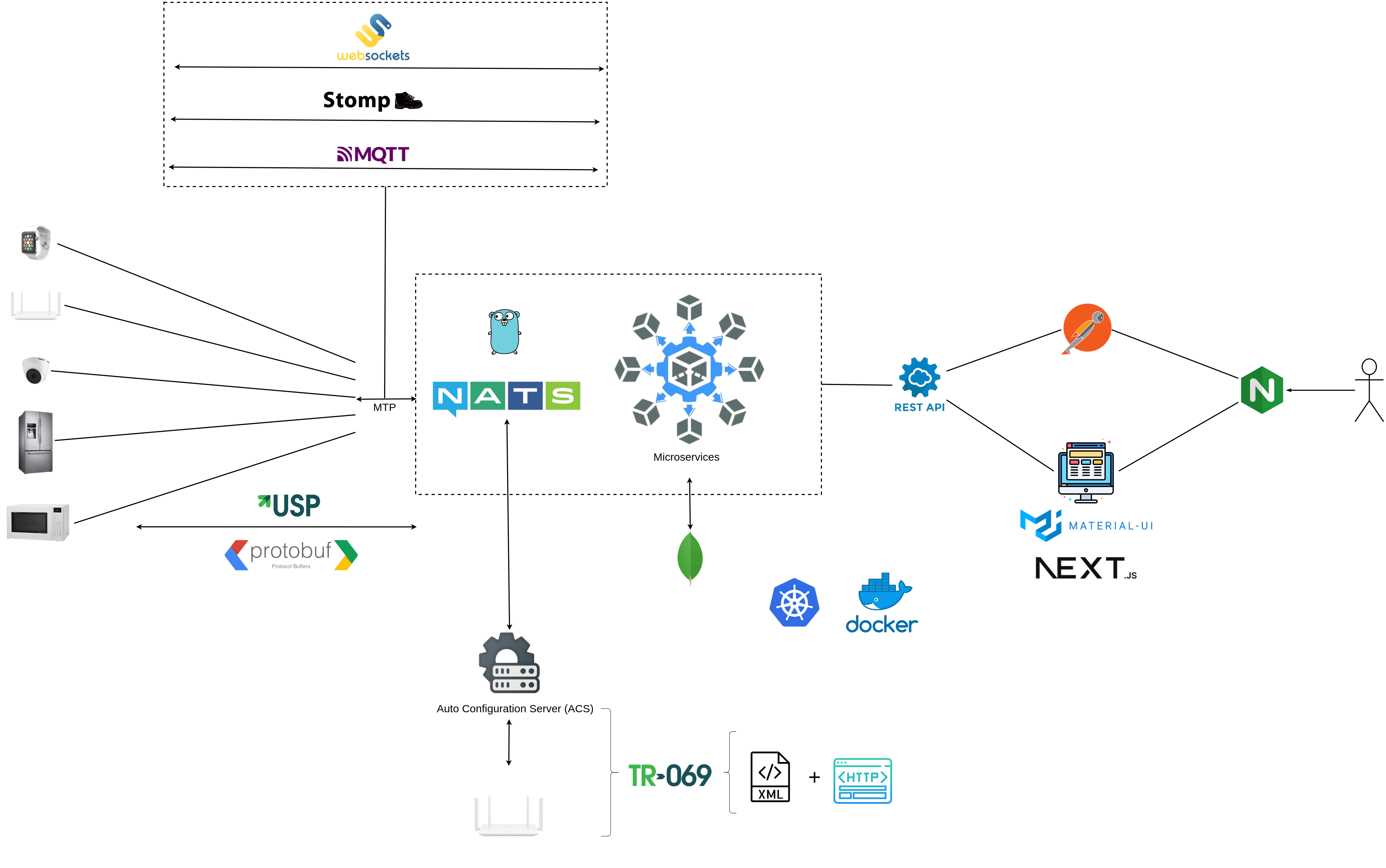
Oktopus Controller backend is made up of some microservices written in [Go](https://go.dev/) because of the language versatility, speed, and small resource usage footprint. All the microservices communicate with each other through [NATS](https://nats.io/), which is a robust message system, really fast, built for IoT and edge applications. The database picked is [MongoDB](https://www.mongodb.com/), which makes possible to have flexible data, saved in the right manner based on our needs.
The frontend is made with the most modern frameworks and design system available in the market. It has the [Material UI ](https://mui.com/material-ui/getting-started/)components lib integrated with [NextJS](https://nextjs.org/), which ensures a smooth single page app experience.
High-Level Components
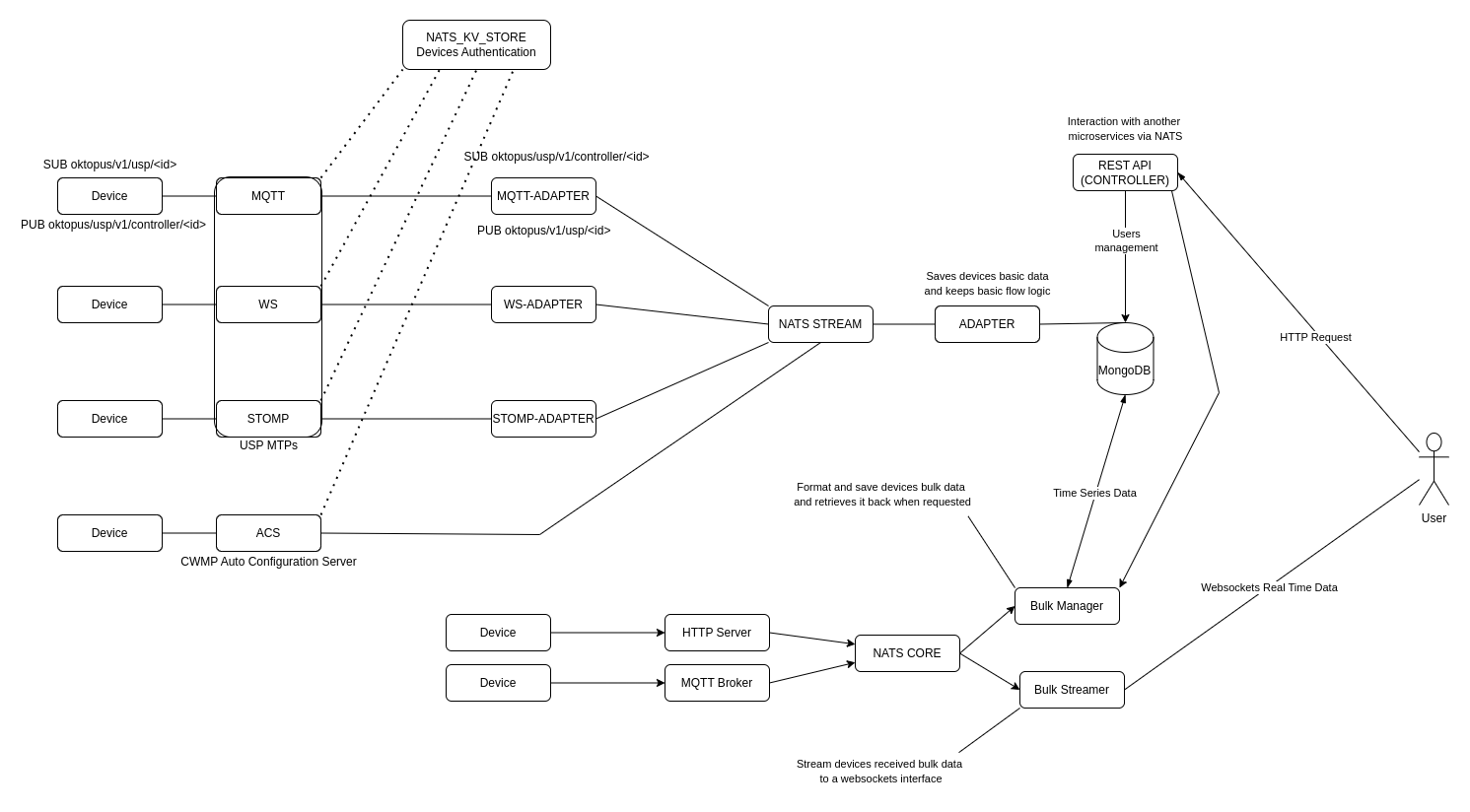
All the different protocols used to manage the devices are abstracted to NATS message system, this allow us to have different components/services deployed in different servers, and locations, as long as the connection to NATS cluster is maintained.
Software components are deployed within [Docker](https://www.docker.com/) containers. The most straigthforward way to install Oktopus Controller is using docker compose. For high availability production environments we suggest to use Kubernetes.